
Deep Dive
Jacob Mehr (BSPE 2023) started SCUBA diving when he was 10. He and his dad would spend long afternoons among the carp and catfish in the quarries near their home in Dallas, Texas. Six years ago, Mehr decided to take his hobby a flipper kick further when he began exploring underwater caves.
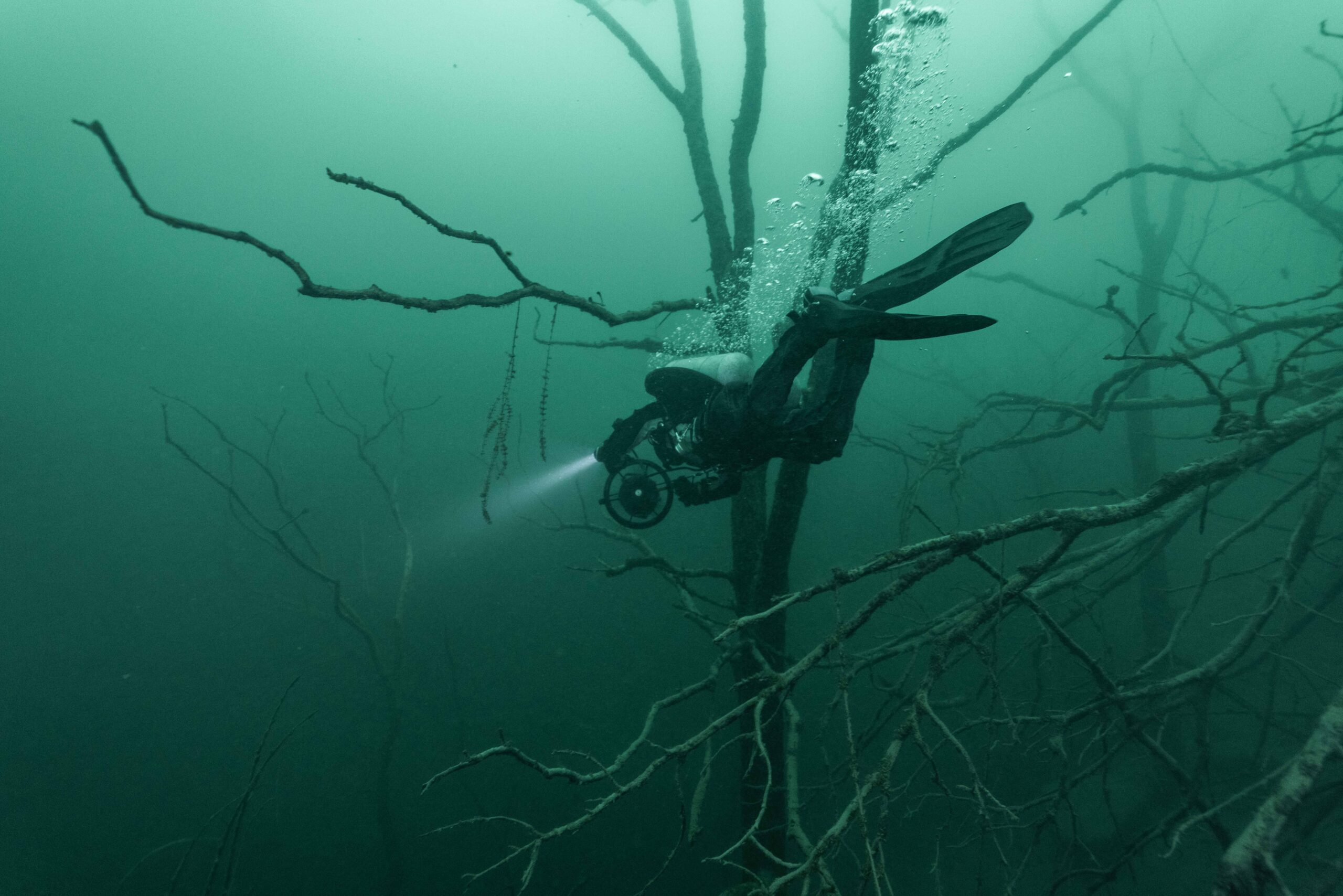
While diving itself requires extensive practice and mastery of a unique set of skills, cave diving adds new challenges. Though cave systems have been around for thousands of years, they are fragile environments that can shift or collapse with little warning. Large, open areas flowing with crystal clear water can narrow into intricate networks of pitch-black passages. Even with flashlights, clay or silt can make it impossible to see. And if anything goes wrong, the trek to the surface can take hours.
Sound risky?
It depends on how you look at it, says Mehr.
“It’s arguably the most dangerous kind of diving. But it isn’t about risk taking — it’s about risk management. You spend hours and hours training so you know all the protocols backwards and forwards.”
Jacob MehrUT PGE Student
Mehr usually carries a minimum of 150 pounds of diving equipment, plus a heavy-duty mirrorless camera, a wide-angle 16-millimeter lens and several strobes to photograph cave geology and aquatic life, like limestone stalactites, blind salamanders and pigment-less fish. “Unlike how Hollywood portrays it,” he says, “there are no sharks lurking in the caves searching for divers to eat.”
In addition to diving for fun, Mehr has worked with Jackson School of Geosciences Professor Bayani Cardenas as his dive partner on research tracking seasonal water turnover in Lake Travis to assess the lake’s health. In fact, Mehr understands better than most the ecological connections between an underground or underwater ecosystem and the humans who live, work and build above it. That’s partly why he chose to major in petroleum engineering.
“In the oil and gas industry, it’s crucial to preserve groundwater aquifers from contamination,” he says. “That means solid engineering when it comes to all processes, from drilling and completions, to production, and eventually the plugging and abandonment of wells.”
Not to mention preserving the underlying geology for future explorers.