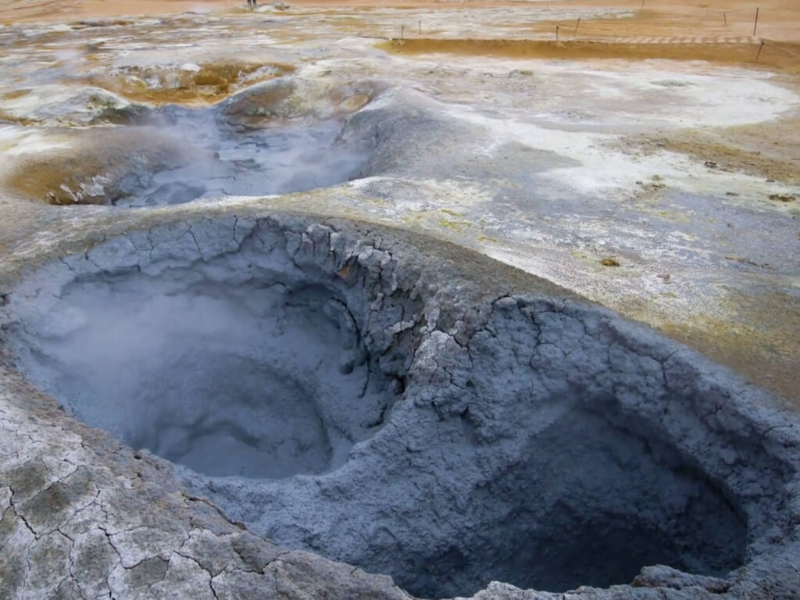
Turning Down the Heat
In its May report, the International Energy Agency called on the scientific community to focus on decarbonizing the global economy by 2050.

Reaching net-zero carbon dioxide emissions while keeping energy plentiful, expanding energy equity and fueling economic growth “will require nothing short of the complete transformation of the global energy system,” the authors write.
Progress in decarbonization depends in large part on how quickly experts can test, refine, deploy and scale fledgling technologies and techniques. And petroleum engineers may be among those best suited to lead the charge, according to the IEA report. With mastery of the subsurface environment and extensive infrastructure knowledge, “the expertise of the oil and natural gas industry fits well with technologies … needed to tackle emissions in sectors where reductions are likely to be most challenging.”
In fact, several faculty members in the Hildebrand Department of Petroleum and Geosystems Engineering already have their eyes, equipment and expertise focused on four of these areas — geothermal energy; hydrogen power; carbon capture and storage (CCS); and reduced methane emissions. Here, they explain how (and why) they’re up for the challenge of creating a sustainable energy future.
Geothermal
The potential: With a temperature equivalent to the surface of the sun, Earth’s core generates about three times more heat flow to the surface than what the world currently consumes. If humans were to extract that heat continuously for a million years, only a fraction of a percent would be used — with minimal emissions and no fossil fuels burned. “Geothermal energy is clean, fully renewable and a phenomenal opportunity we have ahead of us,” says Professor Eric van Oort. “There’s nothing we can do to deplete it.”
The challenge: To extract enough heat energy to contribute significantly to societal demand, engineers must drill deeper — and through harder igneous and metamorphic rock — to reach higher temperatures. But these higher-pressure, higher-temperature environments wreak havoc on many conventional bit, casing and cementing materials. Where advanced technologies do exist, economic incentives don’t, so companies are hesitant to pursue mass production. What’s more, the relatively small number of active geothermal wells compared to traditional oil and gas wells means a smaller data set, more trial and error, and significant potential sunk costs.


Mukul Sharma (left) and Eric van Oort (right)
The research: With graduate students in his Rig Automation and Performance Improvement in Drilling (RAPID) consortium, van Oort is using artificial intelligence (AI) and machine learning to mine existing geothermal well data, search for patterns and call out anomalies that could indicate real-time drilling dysfunction. His team is also using AI to automatically analyze images from rig sites and quickly identify the root causes of bit damage and failure. What they learn could advance successful geothermal drilling techniques and speed up technology deployment.
Professor Mukul Sharma is heading up a three-year $4 million project funded by the Department of Energy at its Frontier Observatory for Research in Geothermal Energy (FORGE) site in Utah. Sharma and his UT team will use sophisticated models developed for unconventional oil and gas extraction to simulate the performance of various hydraulically fractured horizontal well completions in a geothermal setting. They’ll implement the most successful scenarios at the FORGE site and monitor the new wells with fiber-optic sensors. The ultimate goal is to develop best practices to guide engineers in scaling up geothermal energy production. “We need to bring the cost down and the power generation capacity up,” Sharma says, “so we can achieve a target cost that makes it viable.”
The oil and gas advantage: Geothermal development “offers a particularly compelling case for oil and gas involvement given the domain expertise, technology application experience and transferable skills that can immediately be leveraged in the geothermal domain,” says van Oort. “Moreover, it can help oil and gas companies deliver on their sustainable energy transition goals.”
Carbon Capture
The potential: Carbon dioxide can be captured directly from the atmosphere or from concentrated emissions sites like power generation and industrial plants — and stored underground in saline aquifers or depleted oil reservoirs. In fact, much of the needed technology is already proven and viable. Once captured, as much as 55,000 gigatons of CO2 could be stored worldwide, according to IEA estimates. From a societal standpoint, carbon capture and storage (CCS) can help ameliorate energy poverty in developing countries by allowing them to continue relying on less expensive or already established fossil fuels once technologies like wind and solar become more widespread in developed countries.


Ryosuke Okuno (left) and Nicolas Epinoza (right)
The challenge: CCS technologies, including plants to capture the CO2, pipelines to transport it and wells to store it, are expensive and currently unprofitable without government subsidies. Where the stored carbon can be used for other purposes, like enhanced oil recovery, turning a profit becomes tied to the fluctuating price of oil. Plus, not all theoretical storage sites are created equal: “Sedimentary systems are complex and hard to fully map,” says Associate Professor Nicolas Espinoza. “Some sites may end up being the equivalent of drilling a dry hole,” creating a vicious cycle of economic infeasibility.
The research: Espinoza and fellow Associate Professor Ryosuke Okuno are co–principal investigators of the Hildebrand Department’s Carbon Utilization, Storage and Transportation (CarbonUT) industrial affiliate program launched in July. With funding from industry partners like JX Nippon and InPex, Espinoza and Okuno lead an interdisciplinary research team focused on reducing carbon emissions in the energy industry and accelerating knowledge transfer for worldwide CO2 storage and utilization. Okuno himself is currently exploring turning CO2 into formate and formic acid, which is 200 times denser than traditionally stored carbon and would allow more carbon to be stored underground. “Breaking down the formic acid would also create a large, safe hydrogen reserve that could be used for energy,” he says. “The whole process can be done in an electrochemical way that is already technologically ready for pilot testing.”
The oil and gas connection: Petroleum engineers are experts in key areas needed to construct successful carbon storage sites, like determining injection rates and storage capacity, monitoring pressure and seismicity, and ensuring seal integrity. Many also have the data analytics chops needed. “It’s practically impossible to run simulations for all possible injector locations and schedules,” says Espinoza. “With machine learning, we can optimize storage site selection, find local maximums and get started sooner.”
Methane Emissions
The potential: First, some bad news. The methane leakage rate from natural gas systems in the United States is about 2.3 percent — with 1.6 percent coming from upstream processes like drilling and fracturing. Because methane is a highly potent greenhouse gas, however, “reducing emissions can significantly improve the oil and gas industry’s environmental performance,” says Research Associate Professor Arvind Ravikumar. “It’s the low-hanging fruit.”
The challenge: Methane emissions data provided by the Environmental Protection Agency is outdated, relies on a miniscule sample size and underestimates total emissions by about 60 percent. Quantifying the actual amount can be costly and time-consuming and depends on myriad factors like location, time of day and year, and facility age. But getting accurate numbers is the key to fixing the problem, says Ravikumar: “You can only address something if you know where it is happening, and you can only know where it is happening if you go measure it.”

Arvind Ravikumar
The research: Through his Sustainable Energy Transition Lab, Ravikumar and his team have tested how well more than 20 technologies measure methane emissions at sites from New York to California using planes, drones, satellites and truck-mounted sensors. Based on that data, the team has begun modeling the most effective and cost-efficient ways to reduce emissions. The ultimate question is, “which technology X, on platform Y, surveying Z times per year, in basin B under these particular weather conditions and repair rules can reduce emissions by 50 percent?” says Ravikumar.
The team has discovered that 25 percent of sites contribute 75 percent of total methane emissions. “But by the time you get to those facilities, you might have already spent a month in the field measuring others that were just fine.” Ravikumar hopes that AI can help identify likely super-emitters, saving time and money in the process. “We are just starting to peel back the power and potential for machine learning to address these issues,” he says.
The oil and gas connection: Since methane leaks happen most often in the upstream cycle, petroleum engineers already have the skills to fix them. “You also have to understand how new technologies work and, importantly, how that fits into the broader socioeconomic systems we have in the world,” says Ravikumar. “A PGE background plus that kind of interdisciplinary toolkit leads to effective sustainability solutions.”
Hydrogen
The potential: Hydrogen’s appeal lies in its versatility: Lots of fuels generate it as a byproduct; it can be easily transported and stored; it’s lightweight and energy-dense; and when it’s used for fuel, its produces only water vapor, not greenhouse gases. “But its true potential is in decarbonizing industries that find it particularly challenging to find cleaner fuel sources,” says Research Professor Mojdeh Delshad. “Some of its potential uses are in powering long-haul trucks, trains and planes, and it can be blended with natural gas for home heating and cooking.”
The challenge: Nearly all the hydrogen produced in the United States is made by a production process called natural gas reforming in large central plants. While that makes excellent use of existing natural gas infrastructure, global extraction of hydrogen from fossil fuels emits about as much carbon dioxide each year as the United Kingdom and Indonesia combined. “We need to figure out how to best combine these processes with carbon capture and storage to reduce emissions,” says Delshad, “while also identifying field-proven technologies to store large quantities of hydrogen underground until it can be transported and used for energy.”


Kamy Sepehrnoori (left) and Mojdeh Delshad (right)
The research: Delshad, with Professor Kamy Sepehrnoori and Bureau of Economic Geology Senior Research Scientist Peter Eichhubl, are working to develop a screening tool to assess which subsurface reservoirs are best suited for hydrogen storage. After modeling how hydrogen behaves compared to CO2 at different reservoir temperatures and pressures, they simulated injecting hydrogen into a saline aquifer and a defunct natural gas reservoir to provide data for the screening tool. It’s a work in progress, says Delshad: “Even more research is needed to develop a fast and robust tool to select, design and execute efficient and safe storage projects. Despite our vast experiences in storing CO2 and natural gas, H2 storage has its own unique challenges.”
The oil and gas connection: There are many options for underground hydrogen storage — manmade caverns, salt domes, aquifers, and depleted oil and gas fields, to name a few — and petroleum engineers have the expertise to determine which formations will work best, how quickly and in what form the hydrogen can be safely injected, how it will react while stored, and the most effective way to withdraw it for transport. “The industry has been doing this with some degree of success since the 1980s,” says Delshad. “It’s time to figure out how to scale up what we’ve learned and help kickstart the hydrogen economy.”