Thirty Something
Alumna Karen Hagedorn shares reflections on three decades in oil and gas and what comes next.
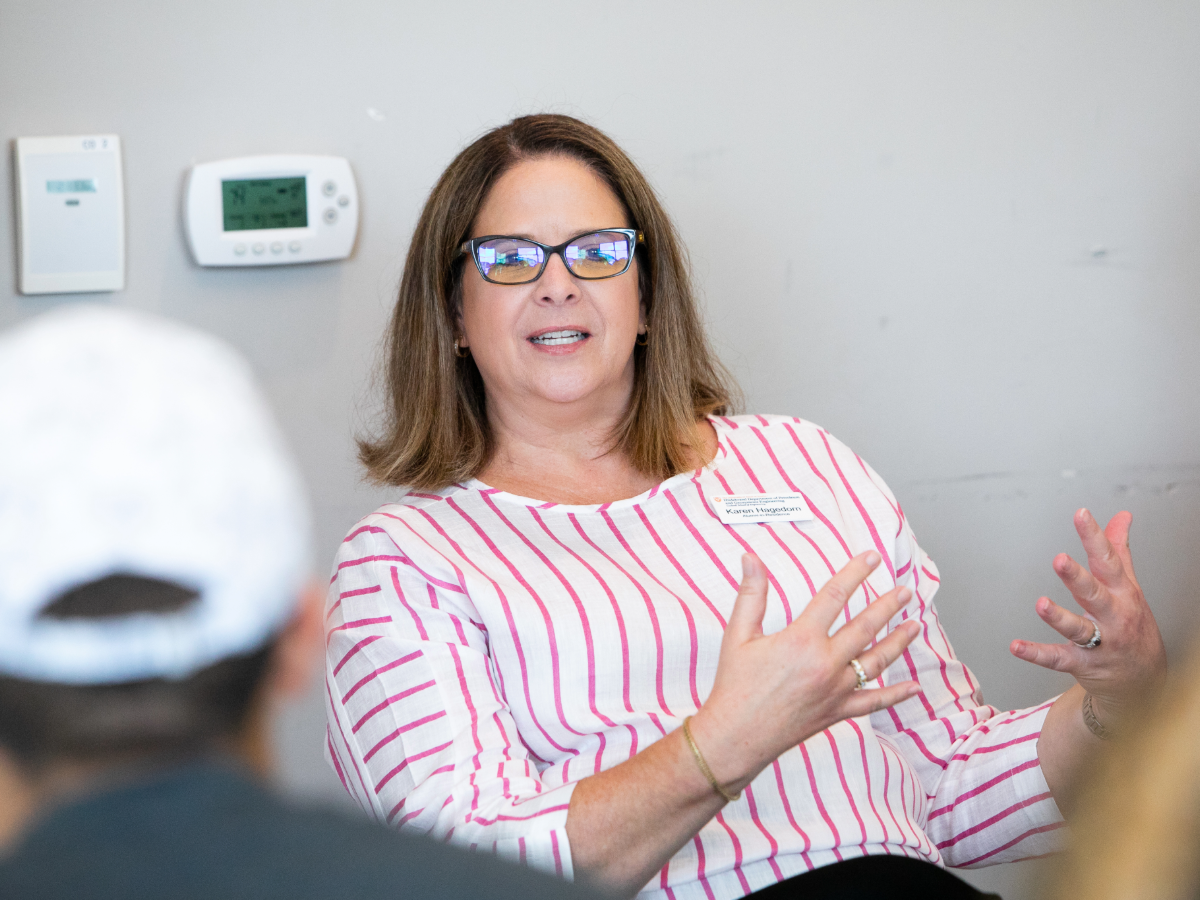
Karen Hagedorn (BSPE 1986) spent nearly 30 years in the oil and gas industry working across the globe from Angola to Alaska. She’s done it all, from reservoir engineering and enhanced oil recovery to asset development, research and field testing, and business analysis. Last year, after retiring from ExxonMobil, she accepted an invitation from UT PGE Chair Jon Olson to meet and mentor students as part of the Alumni in Residence program. Here, she discusses her distinguished career, what’s next for the industry, and why petroleum engineers are critical for a sustainable energy future.
What projects or experiences are you most proud of in your career?
I’ve worked on many exciting projects in almost 30 years, but at the end of the day, the thing that makes any project successful is the people. I am most proud of my focus on developing people, particularly giving chances to those that others may overlook for whatever bias or reason. Seeing people succeed beyond everyone else’s expectations was my greatest reward.
Any funny moments to share from your career?
My biggest travel mishap actually turned into a great opportunity. I was taking a charter flight back to Angola, and it was canceled for mechanical reasons. This was on a Wednesday, and there wasn’t another until the following Monday, so I was stuck in Houston. This was 2017 and happened to be during the World Series when the Astros were playing the Los Angeles Dodgers. I half-jokingly posted on Facebook that I was stuck and did anyone have an extra World Series ticket, and a friend from high school said yes! I ended up getting to go to games 4 and 5!
Knowing what you know now, what would you tell your fresh-out-of-college self?
Spend more time in the field — really talk to the people working there. They know way more than you do.
What do you think is the most significant challenge facing new petroleum engineering graduates today? The most significant opportunity?
I think the fundamental challenge is the same as it’s always been — the uncertainty of a commodity industry and its cycles. The specific dynamics change, but uncertainty is the only certainty in our business. There’s also the opportunity to solve what is probably the most important challenge in modern times — people need energy to improve their lives. You only have to visit villages in Alaska, Africa or many other places to see what we take for granted. However, the ways of the past are unsustainable. We need more than aspirations and opinions; we need lasting solutions that donʼt hurt those most in need. That’s the opportunity: to work as an engineer on such an important dual challenge.
Some say the oil and gas industry is on the decline and can’t thrive in a net-zero economy. How do you respond to that?
Realistically, oil and gas will need to be a part of the energy mix for quite a long time, even if its fraction of the mix declines. But remember that oil and gas fields decline in production over time, so there is always a growth business to just maintain production or even mitigate the natural decline. Even if oil and gas decline overall from a demand standpoint, there is still a need for growth in supply that will make the industry dynamic for a long time to come.
What does it mean to you to be part of the UT PGE community as an alumna and advisor?
I’m proud to be a second-generation UT PGE graduate and to continue to be involved in the No. 1 petroleum engineering program in the country. I’ve had the most incredible opportunities to travel, live all over the world, and meet and work with the best people because of what started in UT PGE. If I can share some of my experiences with today’s students to help them have a great career, that makes me happy.